
Orienteering is an engaging outdoor activity that combines navigation and physical exercise, making it ideal for individuals and families alike. Participants use a detailed map and compass to locate checkpoints in diverse terrains, aiming to complete the course in the shortest time possible.
Why Choose Orienteering?
- Beginner-Friendly: The orienteering community is welcoming to newcomers. At events, you’ll find volunteers eager to assist and guide you through the basics.
- Family-Oriented: Courses are designed to cater to all ages and skill levels, ensuring a fun and educational experience for everyone.
- Flexible Participation: No special equipment is required beyond comfortable attire suitable for outdoor activities. Long trousers are recommended for forested areas, while a compass can be helpful but is not mandatory.
Getting Started
- Attend an Event: Check our Events Calendar for upcoming local events. Upon arrival, look for individuals wearing “ASK ME FOR HELP” vests—they’re there to assist you.
- Explore Permanent Courses: For practice at your own pace, visit our Permanent Courses available in various locations.
- Connect with Us: Join our community on Facebook to stay updated on club activities and events.
Further Resources
- Training Opportunities: Adults interested in structured learning can enroll in non-residential weekend courses at the National Orienteering Centre at Glenmore Lodge.
- Educational Materials: Learn more about orienteering through the Scottish Orienteering Association’s New to Orienteering section and the British Orienteering Newcomer’s Guide.
Choosing Your Course: Colour-Coded Difficulty
At most local events, courses are colour-coded so you can pick the right challenge for your age, experience and fitness. Each colour shows the technical difficulty of the navigation, not just the distance. The chart below shows how they compare.
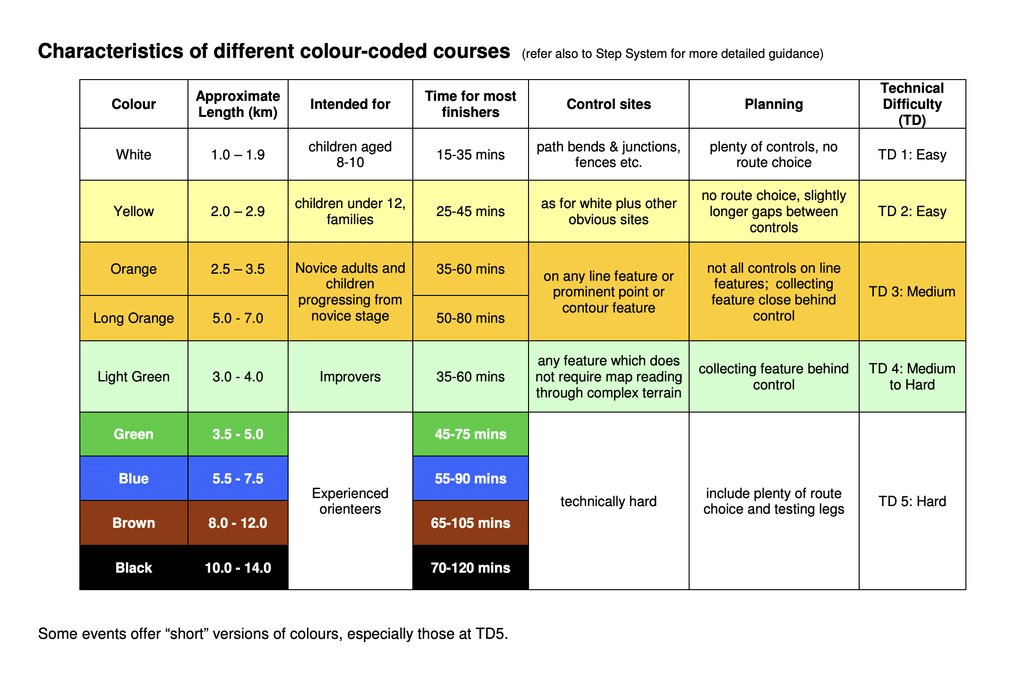
- Move up when you’re ready: Most people try White or Yellow first, then progress as their confidence grows. There’s no rush, and plenty of people stay at their favourite level for years.Embark on your orienteering adventure today—it’s a sport that sharpens both mind and body while fostering a sense of community and exploration.
- Start easy: White and Yellow courses follow clear features such as paths, fences and walls, so they’re ideal for first-timers, young children and families.
- Step up gradually: Orange and the middle colours introduce more route choice and less obvious features, and you’ll start leaving the paths.
- Challenge yourself: The harder colours (Green, Blue, Brown) are longer, with more demanding navigation through complex terrain, and suit experienced orienteers.
- Mix and match: Course length and difficulty are separate. You can choose a shorter course at a harder technical level if you’re experienced but not feeling like a long run.
For More Information
Want to know more before your first event? The Scottish Orienteering Association has two helpful guides:
- What to Expect at an Orienteering Event: A step-by-step walk-through of the day, from registration and collecting your map to using your timing chip and downloading your results. It also has top tips for reading the map.
- What Is Orienteering? Course Names Explained: More detail on the colour-coded courses and what each level involves, to help you choose where to start.
Still not sure which course to pick? Ask at registration or get in touch with us and we’ll help you out.
Embark on your orienteering adventure today—it’s a sport that sharpens both mind and body while fostering a sense of community and exploration.
UPDATED: